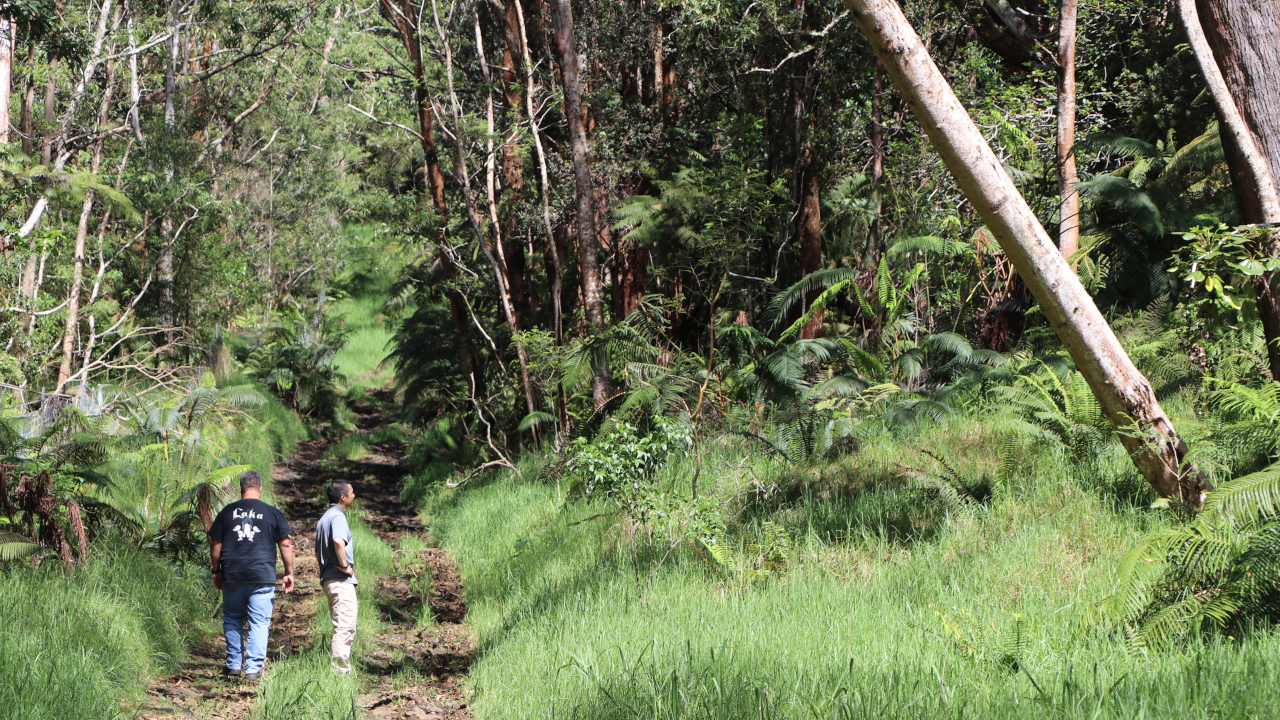
(BIVN) – Applications for koa canoe logs harvested from the Kapāpala Koa Canoe Management Area are now open.
The Hawaiʻi Department of Land and Natural Resources (DLNR) Division of Forestry and Wildlife (DOFAW) Forestry Program announced on Friday that applications from individuals and organizations seeking to acquire the koa logs for use in kālaiwaʻa – the construction of traditional Hawaiian canoes (waʻa) – must be submitted by midnight on May 30, 2026.
The applications can be downloaded from the DLNR website.
From the Hawaiʻi DLNR:
DOFAW will assess applications based on established criteria, including the overall community and cultural impact, as well as the applicant’s demonstrated capability and readiness. Selected applicants will be notified in August.
A volunteer working group with diverse community perspectives including kūpuna, residents of Kaʻū, lineal descendants of the area, canoe clubs and associations, cultural practitioners, canoe builders, foresters and conservationists developed a protocol for distributing the logs to ensure the process has integrity and is aligned with traditional practices and cultural values.
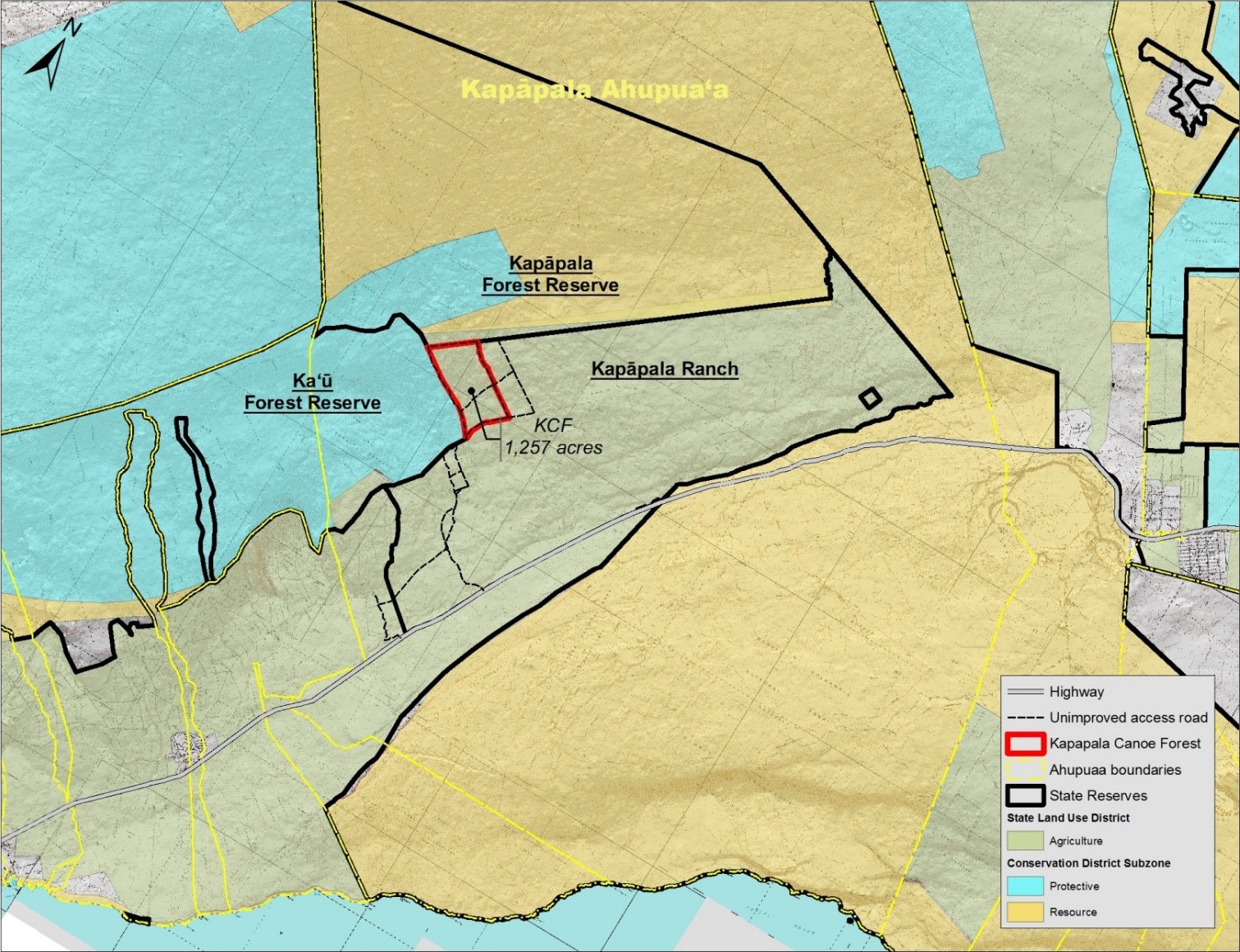
map from the DOFAW Kapāpala Koa Canoe Management Area website
In ancient times, waʻa were the main form of transportation across Polynesia and were utilized in many aspects of life such as voyaging, fishing, warfare, and sport.
The building of a canoe is traditionally led by the kahuna kālaiwaʻa, or master canoe carver. Koa (Acacia koa), a tree species unique to Hawaiʻi that can grow very large, has been a prized material for this process. While the tradition is still alive today, access to canoe-quality koa has been scarce, so the 1,257-acre KKCMA was set aside more than 20 years ago specifically for the cultivation and harvest of koa trees for traditional Hawaiian canoe construction.
“Decades in the making, we are honored to move this vision into action,” said DLNR Acting Chair Ryan Kanakaʻole. “This is a monumental moment because it restores the opportunity for future generations to continue the practice of kālaiwaʻa and reaffirms Kaʻū as a place where ʻike kūpuna is sustained and passed forward. The Kapāpala Koa Canoe Management Area reflects years of dedication by cultural practitioners, community members, and foresters working together to restore balance between forest stewardship and traditional practices.”
“Within the sacred koa trees of our Kapāpala Forest lives the breath of our kūpuna and the songs of our endemic Hawaiian birds,” said Kapāpala working group member and Kaʻū resident Nohea Kaʻawa. “When we walk the path of our ancestors with respect and proper protocol, we are not just harvesting and carving a tree, we are continuing the flow of knowledge passed down through generations. This process strengthens our community and our cultural identity. While honoring the traditions entrusted to us through navigating this path, we serve as the bridge that carries ancestral wisdom into the future for those yet to come.”
“This project includes the collaboration of the State of Hawai‘i and local cultural practitioners, canoe clubs and civic organizations to help bring back one of our most sacred traditions.” says Hovey Lambert, a traditional canoe carver and Kapāpala working group member.
“The Kapāpala Koa Canoe Management Area provides an opportunity to combine traditional Hawaiian practices and the best of sustainable forest management,” notes Forestry Program Manager Jennifer Grimm. “It’s a hopeful example of what may be possible for Hawaiʻi’s forest in the future.”

by Big Island Video News
on at
STORY SUMMARY
KAʻŪ, Hawaiʻi - Individuals and organizations can apply acquire a koa canoe log for use in kālaiwaʻa, the construction of traditional Hawaiian canoes.